Coordinating Agent Incident Response Across ML and SRE Teams
ML and SRE teams need shared incident taxonomy to diagnose agent failures.
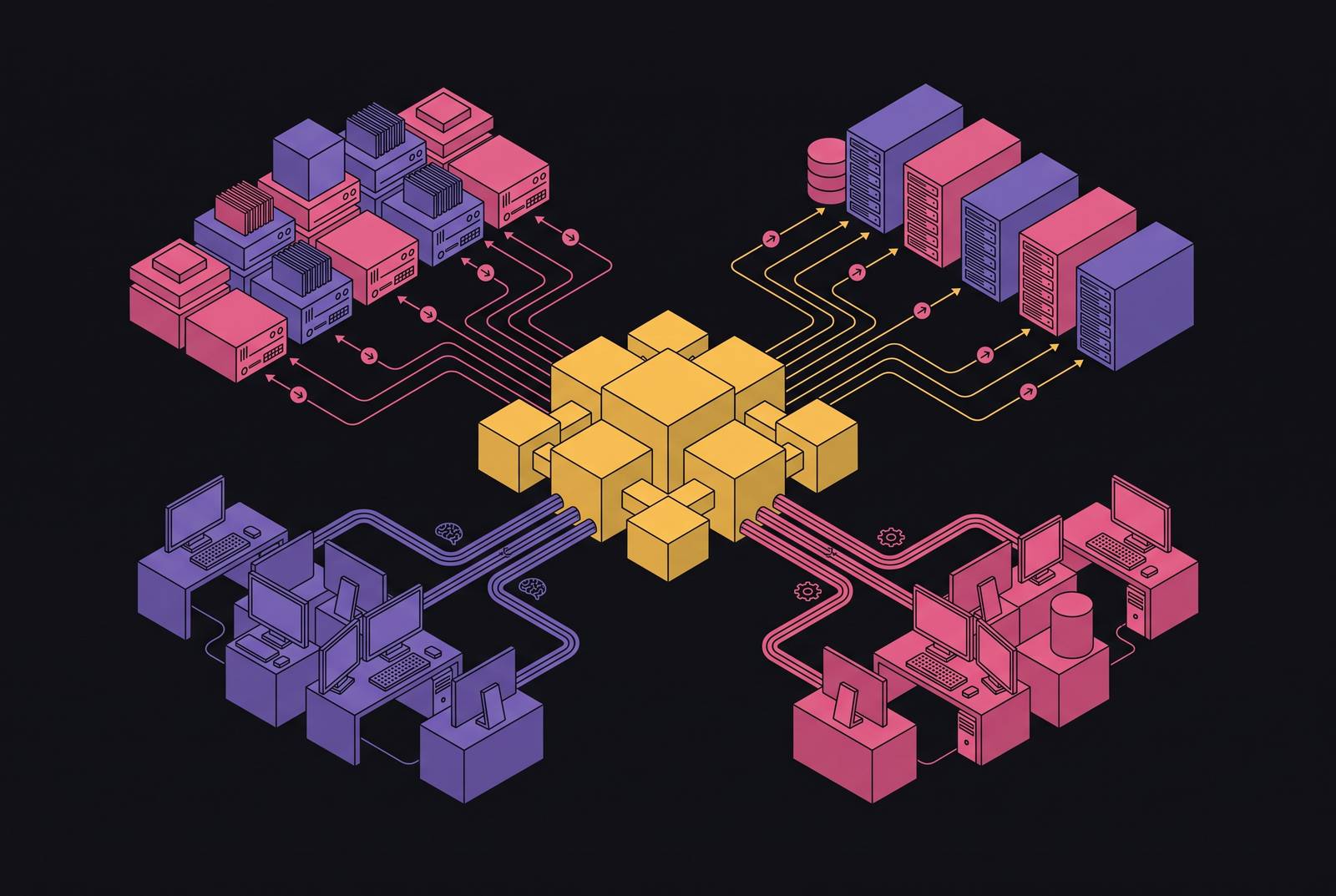
Traditional error monitoring fails for AI agents because instruction-following falls outside its system-health measurements. A wrong answer can arrive with a successful response, normal latency, and no exception. ML and SRE teams need a shared way to handle agent incident response, with the same failure taxonomy, clear ownership boundaries, and joint runbooks that link behavioral diagnosis to control of production.
Why agent incidents break existing team boundaries
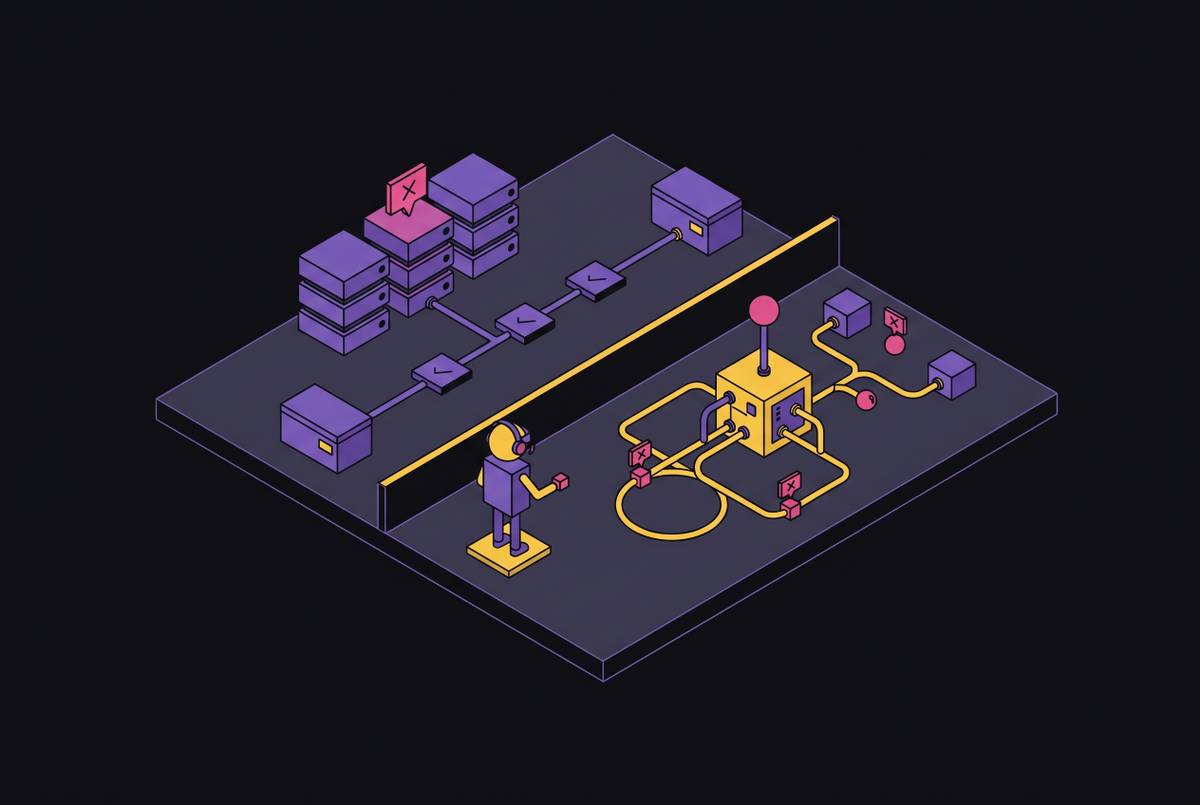
An on-call page reports that an agent is returning wrong outputs, but nothing has crashed. SRE sees a successful response and infrastructure that is working, while ML sees an identifier the agent made up in the answer. SRE owns system health but cannot infer correctness from a 200 response. ML owns model behavior but lacks the production telemetry and incident command authority needed to control an active failure at scale.
This division becomes dangerous when successful execution conceals degraded behavior. Liu et al. (June 2026) document silent failures that propagate across agent networks for multiple cycles before an operator notices, because no error is raised. Even after someone detects the problem, the visible outcome does not establish who can repair it. Scale AI’s interaction-centric taxonomy shows that when an agent falsely reports tool success, it may need model post-training or changes to harness-side scaffolding. More courteous handoffs cannot resolve these structural coordination barriers.
The failure modes that demand joint ownership
A shared failure taxonomy gives both teams names for what broke before they debate who acts. Five categories provide the working vocabulary, namely planning errors, tool errors, retrieval errors, reasoning errors, and safety and policy violations. For each category, someone must own detection, and there must be a path to repair. Those roles often sit on opposite sides of the ML and SRE boundary, so assigning an entire category to one team obscures the work needed to resolve it.
Planning errors can take the form of wrong tool sequences, infinite loops, and premature termination. SRE detects cycle anomalies in trace metrics, while ML diagnoses the planner and compares the emitted plan with the executed sequence. Tool errors can take the form of wrong arguments, tool hallucination, and missing error handling. Their detection depends on external telemetry that captures actual tool results, while repair belongs in the harness or tool integration. An agent’s claim that a call succeeded cannot substitute for evidence that it did.
Retrieval errors require SRE to detect a quality shift across production traffic and ML to diagnose wrong chunks, missing context, or hallucinated sources. Reasoning errors need model-side diagnosis when facts or math are wrong or the agent ignores instructions despite grounded context, but quality scoring can detect these errors at scale. Safety and policy violations split responsibility differently, with ML defining the boundary and SRE operating the output scanner and alert path. Across these categories, a “fail-plausible” failure deserves explicit recognition because the agent turns a tool or retrieval error into fluent, confident, false narrative. The response looks complete precisely where the underlying task failed.
Scale AI’s taxonomy adds the routing detail that broad categories lack by assigning failures to an interaction edge and a fault side. That assignment distinguishes model post-training from harness engineering or environment redesign. Operational enforcement then turns the vocabulary into incidents that teams can act on. Tools such as Lemma, which audit production traces against the agent’s instructions and group recurring deviations, provide one way to connect those categories to routed findings. A shared label is useful only if both teams can inspect the evidence behind it.
Why traditional error monitoring misses agent failures
The standard four golden signals are latency, traffic, error rate, and saturation. All can remain healthy when an agent returns a wrong but well-formed answer. Traditional error monitoring therefore answers whether the system completed its work. The defect sits in the answer’s relationship to the task.
Liu et al. demonstrate accumulating disorder across interaction rounds through systematic analysis of over 40,000 controlled trials of silent failures. Their Entropy Principle describes how output consistency and task accuracy can degrade while infrastructure remains healthy. A dashboard that tracks availability does not show that drift in behavior. Nor does the agent’s own account necessarily reveal it, because an agent that mishandles a tool result may also report that result incorrectly. Logs drawn only from its internal reporting can preserve the false account and leave the failure hidden.
Two missing measurements explain the operational gap. A quality signal, expressed as eval pass rate on a sampled set, supplies a “judgment SLO” for decision quality. Cost per run reveals another dimension, with cost above the P99 historical distribution serving as an early indicator of runaway planning-layer loops. Agent monitoring tools, including Lemma’s instruction-based trace auditing, check correctness where general-purpose system-health signals leave it unchecked.
Building the shared telemetry layer both teams can act on
The first instrumentation priority is a single stitched trace that both teams can inspect. It must connect the agent’s instructions, plan, tool interactions, and results rather than leave diagnosis dependent on separate outcome logs. The OpenTelemetry GenAI semantic conventions provide a concrete coverage checklist across six layers, which are client spans, agent and workflow spans, MCP conventions, semantic events, metrics, and provider-specific attributes. Tool-call results need an external telemetry contract independent of the agent’s reasoning. That separation preserves the evidence needed when the agent reports success incorrectly.
Ownership of this layer must be explicit and symmetric. SRE owns instrumentation health and alert routing, while ML owns scorer definitions and quality threshold calibration. SRE can run alerts when cost per run is above P99, tool call count is above P99, or a quality score drops in a rolling window. ML validates that the quality thresholds represent meaningful behavioral degradation. Neither team can replace the other’s contribution, because a sound scorer without reliable telemetry is as limiting as reliable telemetry without a definition of correctness.
Lemma audits traces against the agent’s instructions, groups recurring failures into actionable issues, and alerts in Slack. AgentTrace, presented at ICLR 2026 Workshop on Agents in the Wild, demonstrates a complementary diagnosis method through causal graph reconstruction. It traces backward from error manifestations and ranks candidate root causes using structural and positional signals without requiring LLM inference at debugging time. Together, complete interaction evidence and localization give SRE a containment context and ML a ranked set of hypotheses for triage.
Defining ownership boundaries before the incident, not during it
An ownership matrix agreed on in advance helps teams decide what to do with the evidence they share. Its entries need to name the failure category, first responder, and escalation path as well as the team tied to the component. The matrix must also separate immediate mitigation authority from repair authority. SRE may need to stop user harm before ML establishes the model-side cause. Leaving those decisions unresolved forces responders to negotiate control while the incident continues.
For planning errors, SRE responds to cycle counts or cost spikes, escalates planner diagnosis to ML, and makes the rollback decision jointly. For tool errors, SRE responds to external telemetry or schema validation failures and mitigates through retry policy or a circuit breaker. ML then validates the harness change against the eval set. For retrieval errors, SRE responds to the quality score drop, ML diagnoses and fixes the retriever or chunker, and SRE confirms recovery through the quality signal.
For reasoning errors, the quality signal prompts ML to investigate, while SRE can still order a rollback if users remain affected. For safety and policy violations, ML owns the definition and fix, SRE owns immediate traffic cutover or output scanner enablement, and both authorize resumption. The 2026 Singapore Consensus on AI Safety identifies Runtime Assurance, Interruptibility, and Human Oversight among its foundational principles. In a runbook, those principles become concrete decisions about who can interrupt an agent, under what threshold, and who can restart it. The Microsoft AI Red Team’s June 2026 taxonomy names Inter-Agent Trust Escalation as a failure category where this split is especially important, because both teams must act at once when one agent compromises another.
The joint runbook: how detection, triage, and fix flow across teams
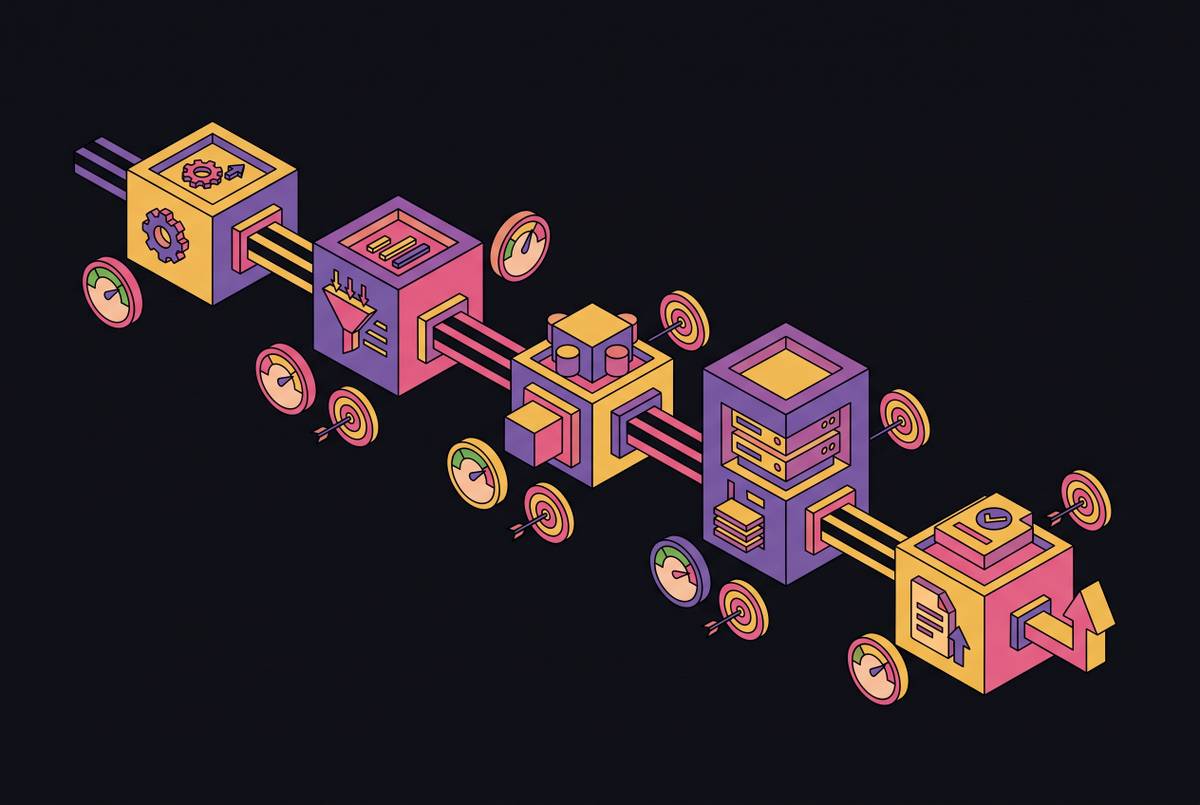
Detection begins when SRE gets a signal of a quality score drop, cost spike, or tool call count anomaly. An automated trace snapshot is captured immediately, because that trace is the incident record. It carries the instructions, observed behavior, and external tool results into every later handoff. Without that record, ML must reconstruct the behavioral failure while SRE works from infrastructure symptoms. The first responder uses the ownership matrix to route the incident without discarding its evidence.
Triage establishes whether the failure is causing active user harm and what failure category the trace indicates. Both decisions must be settled within the first fifteen minutes. If harm is ongoing, containment belongs to SRE through traffic cutover or an agent pause, without waiting for ML diagnosis. Classification then assigns the diagnosis path rather than delaying containment until everyone agrees on the root cause. This gate separates the urgent decision to stop exposure from the slower decision about what needs repair.
Diagnosis uses the stitched trace to determine the fault side. ML uses Scale AI’s interaction-centric frame to tell whether the problem is model-side and needs post-training or a prompt fix, or harness-side and needs scaffolding or tool-integration changes. Causal graph reconstruction can supply a ranked candidate list for that investigation. Meanwhile, SRE maintains containment and does not re-enable agent traffic before the fault side is confirmed. The handoff carries the diagnosis and go/no-go signal.
Fix and validation proceed through separate gates. Any model version change, prompt edit, new tool, or updated retrieval index first runs against the eval set. The rollout then moves through shadow evaluation against live traffic, a small percentage of real users, and a traffic ramp. ML owns the eval gate, while SRE owns the ramp, and neither can bypass the other’s authority because the incident is urgent. Resumption follows these checks, with joint sign-off for safety and policy incidents.
The postmortem records the visible symptom, failure category, and subtype. That subtype becomes a labeled regression test in CI before the incident closes. A prompt tweak may be part of the repair, but it is not sufficient as the incident’s lasting artifact. The runbook also retains the ownership and handoff decisions needed for the next occurrence. Resolution is complete only when the response has produced both a validated repair and a reusable test.
Connecting pre-deploy evals to production incident prevention
The prevention loop starts on merge to main, when trace-based evals run against a golden dataset that holds every labeled incident subtype. Deployment is blocked if regression exceeds the threshold. After deployment, sampled online evaluation of live traces supplies the quality alerts that trigger the joint runbook. The postmortem then adds the newly identified subtype to the golden dataset, expanding the next CI gate.
Pre-deploy evals, production observability, and regression debugging must use the same scorer definitions. If ML’s release tests and SRE’s production quality signals measure different things, passing a gate cannot show that the incident’s failure mode has been fixed. The 2026 Singapore Consensus on AI Safety names Validated Deployment as a foundational principle.
The next page may still report a wrong output from an agent that has not crashed. Responders now share a named failure category, an interaction trace, and a clear containment decision. The resolved incident has also added a CI gate and sharpened the runbook for the next response. Coordination therefore compounds reliability across releases, rather than merely getting two teams through one crisis.