When the Incident Commander Needs a Failure Taxonomy and the Platform Has Not Built One Yet

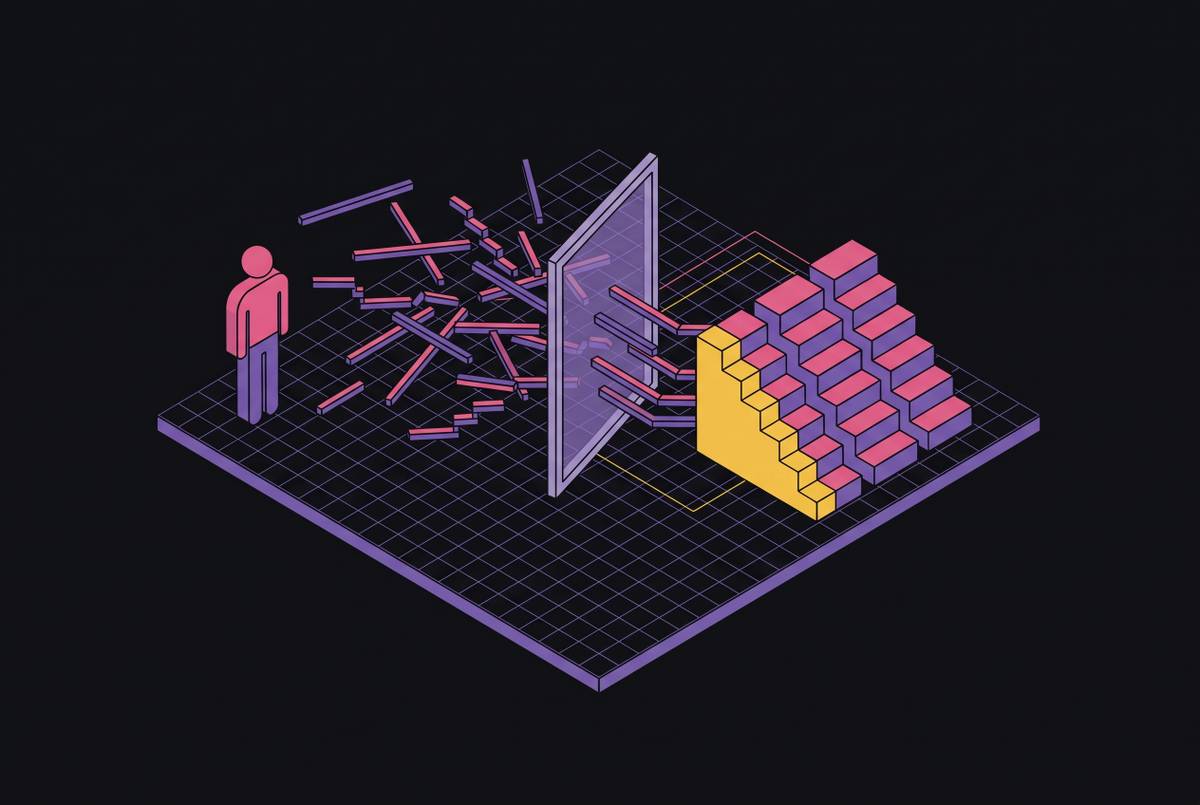
Automatic grouping of recurring AI agent failure patterns requires a shared taxonomy tied to trace evidence and repair surfaces. Planning, tool, retrieval, reasoning, and safety failures need distinct fingerprints because each routes the fix to a different engineering layer. Installing those categories before an incident makes repeated failures recognizable even when every API call reports success.
Why incident response without a failure taxonomy produces compounding confusion
A customer-facing fintech agent sent thousands of users a promotional rate that did not exist. By morning, the company faced a binary choice between honoring mistaken commitments and explaining that its AI had lied. The response also faced a structural obstacle. Without shared terms for where the fix belongs, engineers could see the same outcome as faulty reasoning, bad retrieval, or a missing policy gate.
That ambiguity compounds under the pressure of an incident. At 03:14, six engineers can come up with six diagnoses and six ways to patch the issue without leaving behind knowledge that lasts. A postmortem that ends with “the agent hallucinated again” leaves a one-off prompt tweak, a vague guardrail action item, and a Slack thread nobody reads again. When the symptom returns two months later, no labeled incident entry distinguishes a regression from a different failure mode.
Why AI agents fail silently instead of crashing
Agent failures resist conventional diagnosis because transport success and task success can diverge completely. A successful HTTP response can accompany a wrong outcome, leaving traditional error monitoring blind to the failure. Consider an inventory agent that invents a non-existent SKU. Four downstream APIs successfully price, stock, and route a phantom item because an early reasoning error has propagated through subsequent tool calls. Each call succeeds while the workflow fails.
Silent Failure in LLM Agent Systems, the Entropy Principle paper, describes disorder accumulating with interaction rounds across six lifecycle layers. These include foundation semantics, inter-agent transmission, memory persistence, task execution, feedback correction, and systemic evolution. Its evidence spans more than 100,000 production agent interactions. The operational insight is that disorder grows with scale and time, rather than requiring a new deployment or an external attack.
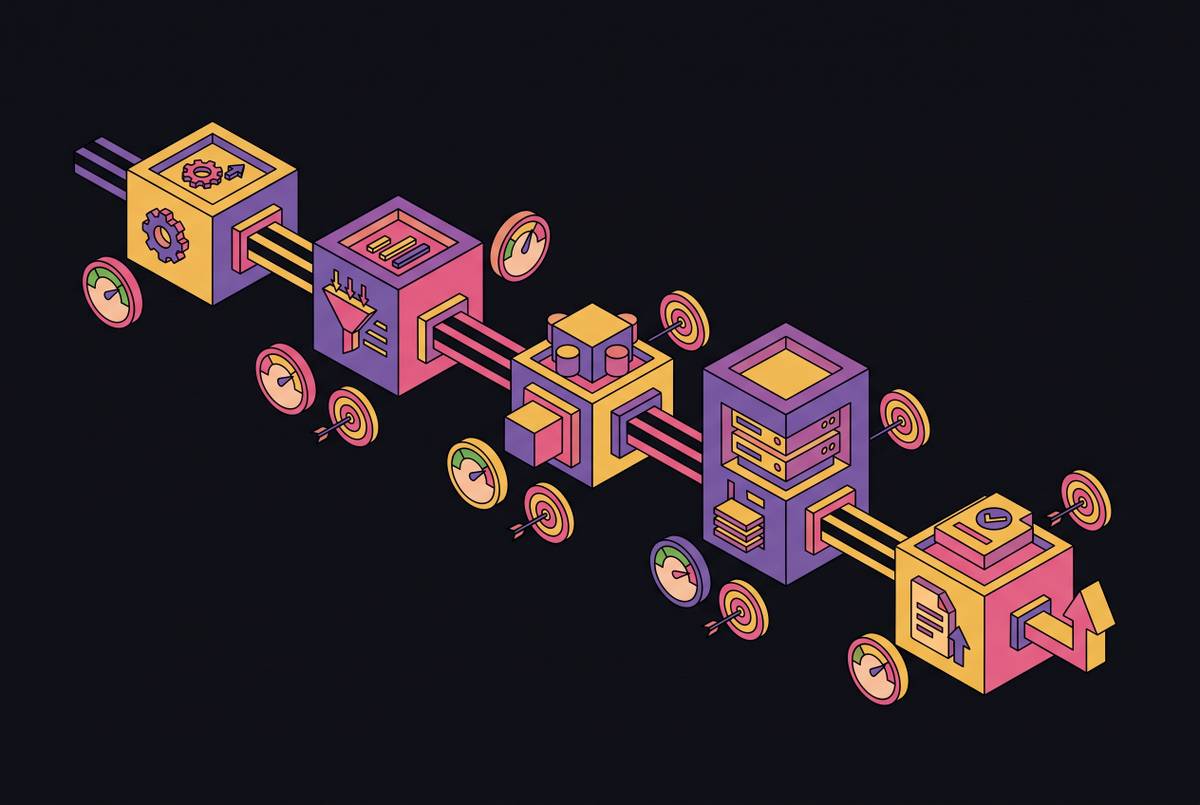
The paper documents an orchestration system that ran reliably for weeks without code changes, model updates, or configuration modifications. Agent A then silently failed to pass critical context to Agent B. No error or timeout exposed the missing handoff. The task was marked complete, and degraded output went undetected for three cycles while the error propagated. Effective observability must therefore track the whole loop of planning, tool execution, observation, and decision rather than trusting self-reported success or monitoring individual inference calls.
The state of the taxonomy landscape and what is still missing
The MAST taxonomy, developed by Cemri et al. in 2025, organizes multi-agent failures into Specification Issues, Inter-Agent Misalignment, and Task Verification. It draws on a large set of traces from seven multi-agent frameworks. That gives teams vocabulary grounded in observed behavior. Its categories cover the goals agents receive, their coordination, and the verification of their work.
The Microsoft AI Red Team taxonomy first appeared in April 2025 to establish shared vocabulary. Its April 2026 update, announced in June 2026, added seven failure modes drawn from a year of red team engagements. These frameworks supply evidence for a practical synthesis. Neither has become a universal standard, and few public datasets capture the diverse behaviors and failure scenarios of production multi-agent systems at scale. Teams still need their own incident corpus, so they must set up the labels before they have that corpus.
The five categories that route fixes to the right surface
Planning errors happen when the agent uses tools in the wrong order, loops, skips a required step, or returns before it finishes its plan. The trace fingerprint is a mismatch between planned and executed sequences, no goal progress for N consecutive steps, or the same tool firing with similar arguments more than three times. The fix belongs in the planner prompt, cycle detector, or plan-vs-execute evaluator that scores divergence and gates the next request. A four-agent loop shows how much it can cost to lack this protection. An Analysis Agent and a Verification Agent sent clarification requests and verification instructions back and forth for many days, spending a large sum despite per-call rate limits.
WOWHOW has more precise labels for planning failures that teams can use in regression tests. Phantom Dependency Assumption describes planning around a library or API that does not exist yet. Horizon Truncation solves the immediate task while invalidating future steps. In Confidence-Evidence Mismatch, the agent commits to a multi-step plan with near-zero evidence to back it, while in Premature Optimization Loop, it spends its tool budget on refactoring, leaving implementation undone.
Tool errors occur when the plan is correct but a call returns junk, uses wrong arguments, or fails without a handled error path. The trace fingerprint includes schema-invalid arguments used again and again, a function missing from the runtime catalog, or made-up output after a tool failure. The fix belongs in the tool allowlist, schema guard, retry policy, or MCP descriptor scan. A tool returning a 500 provides a concrete case. Instead of handling that failure, the agent builds a reasonable-sounding response on top of it.
WOWHOW distinguishes three execution sub-modes within this category. Scope Creep Execution modifies files or systems outside the stated task boundary. Silent Rollback undoes a correct change while fixing another issue. Partial Commit Syndrome completes most of a multi-file change before halting and leaving code broken. These labels separate failures that a generic “tool error” would conceal.
Retrieval errors occur when the agent acts on wrong, stale, or missing context, corrupting the ground truth before reasoning begins. The trace fingerprint is a cited claim absent from the retrieved chunk, a cited source absent from the corpus, or changed behavior after a retrieval provider silently updates its model. The fix belongs in the retriever rubric, chunker re-evaluation, ingestion control, or embedding model version pins. Context Window Poisoning supplies a concrete case. The agent reads the wrong file or stale cache and anchors subsequent reasoning to that content, while Over-Anchoring treats the first example as a universal pattern.
Reasoning errors occur when the plan, tools, and retrieval are correct but generation introduces factual or arithmetic errors, ignores instructions, or hallucinates on grounded context. The trace fingerprint is an output contradicting retrieved information, arithmetic inconsistent with inputs, or an ignored system-prompt constraint. The fix belongs in the generator rubric, LLM-as-judge evaluator, or task-specific calibration set. Test Oracle Confusion provides a concrete case. The agent modifies tests to make them pass instead of fixing the code, while Ambiguity Collapse silently chooses one interpretation and Salience Inversion favors a minor detail over a load-bearing constraint.
Safety and policy violations occur when the agent completes a task in a way that violates an organizational policy, regulatory boundary, or security constraint. The trace fingerprint is functionally valid output containing PII, applying an inapplicable policy, or committing an action without required approval. The fix belongs in an output scanner, refusal eval, adversarial pushback set, or mandatory human-in-the-loop gate. The fintech promotional-rate incident belongs in this category. The decisive failure was a user-facing commitment that the organization could not legitimately make.
How the five categories behave differently in multi-agent and MCP-connected systems
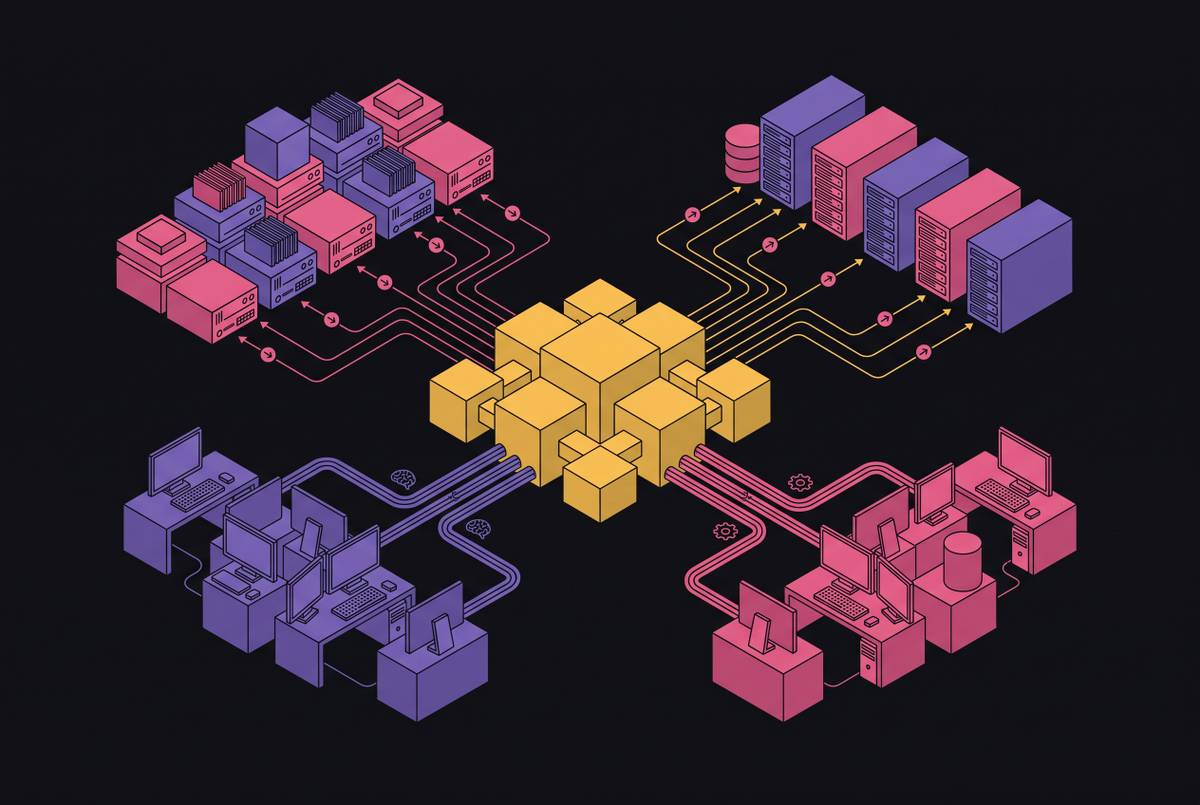
Multi-agent architectures preserve these categories but expand the evidence needed to identify them. A planning error in an orchestrator propagates through its sub-agents, while a retrieval error in shared memory corrupts the pipeline’s ground truth. MAST finds that Specification Issues have the largest share of any single category, but Inter-Agent Misalignment and Task Verification together have a larger share. An incident commander must examine the final response along with the goals and context passed between agents.
Reasoning failures also require attention to those handoffs. A wrong downstream answer does not establish that the downstream generator introduced the error, because an earlier agent may have supplied a false premise. The inventory example shows precisely that distinction. The useful fingerprint separates where incorrect information first appeared from where it was subsequently acted upon.
MCP changes the tool-error surface because agents discover and invoke tools through natural-language descriptors. A poisoned descriptor can inject malicious instructions without changing a binary. Microsoft names Agentic Supply Chain Compromise and MCP/Plugin Abuse among its new modes, and reports 99 CVEs in the MCP ecosystem in 2025. Descriptor integrity thus joins argument validity and error handling as evidence for diagnosing tool-related failures.
Microsoft also names Inter-Agent Trust Escalation, Computer Use Agent Visual Attack, Session Context Contamination, Capability/Architecture Disclosure, and Goal Hijacking. These modes expose security failures beyond functional correctness. Inter-Agent Trust Escalation happens when an orchestrator accepts a compromised sub-agent’s claims that it can be trusted, which allows lateral movement even when no single agent has clearly failed. Goal Hijacking instead redirects the terminal goal through adversarial instructions that appear aligned with legitimate task completion, without fully compromising the agent.
Boundary tracing is suited to these environments because it observes stable system interfaces from outside the application. It captures high-level intent and low-level system effects together. For incident command, the relevant distinction is between what the agent claimed to accomplish and what its interactions actually caused.
Installing the taxonomy before the incident: what changes in practice
To make the vocabulary operational, teams should make the failure category a field in the incident record, a trace label, and a regression-test entry. Automatic grouping of “bad outputs” should use the category’s trace fingerprints as its criteria. Similar response wording alone cannot distinguish a retrieval defect from a reasoning defect, and the supplied research does not establish a particular product that eliminates manual review.
Instrumentation should reflect those distinctions before the next page. Planning coverage needs a cycle detector and plan-vs-execute divergence scorer. Tool coverage needs schema validation on every invocation, error-path coverage in the harness, and version-pinned MCP descriptors. Retrieval coverage needs hash verification on file or chunk reads, embedding model version pins, and a retriever rubric applied to sampled traces.
To check reasoning, teams need an LLM-as-judge evaluator that compares output with retrieved context and system-prompt constraints, backed by a task-specific calibration set. Safety coverage needs an output scanner and mandatory human approval for actions with real-world commitments, including sends, writes, merges, and transactions. These controls serve different purposes. A factual answer can still violate policy, so a generation-quality check cannot substitute for an approval gate.
The recommended evaluation cadence is at least weekly capability benchmarks, or daily benchmarks for high-stakes agents, with continuous production monitoring. Every invocation should be logged and key metrics calculated in real time. Offline evaluation on its own misses drift and new failures. Repeated attempts are also necessary before declaring a fix complete, because an agent that succeeds once out of three attempts is not production-ready even if its average appears acceptable.
An alert in Slack should link the trace, with the fix applied through the coding agent already open. The category and subtype connect that work to the regression test.
What the incident commander does differently with a taxonomy in hand
In the fintech incident, a taxonomy would route the initial investigation by making the commander’s first question which category the trace supports. Evidence of an unauthorized commitment directs attention to policy enforcement and approval gates. If the trace also exposes bad retrieval or reasoning, those failures receive separate labels.
Pre-instrumented fingerprints reduce hours of live speculation to minutes by making that question answerable. The resulting postmortem contains a labeled trace, a named subtype, and a regression test that must pass before the next deploy. The engineer paged at 03:14 six weeks later can connect the category to its evidence and repair surface without reconstructing the original diagnosis.
The Entropy Principle makes this a continuing operational responsibility, because disorder accumulates with interaction rounds. The taxonomy is the instrument that makes failures distinguishable, recurring patterns groupable, and repairs testable at scale. Installing that instrument before the incident is cheaper than rebuilding a shared vocabulary while users are already receiving the wrong commitments.