The Observability Tool Shortlist That Groups Agent Failures by Root Cause Before the Incident Ticket Opens
Catch recurring agent failures by their root cause before the incident ticket arrives.
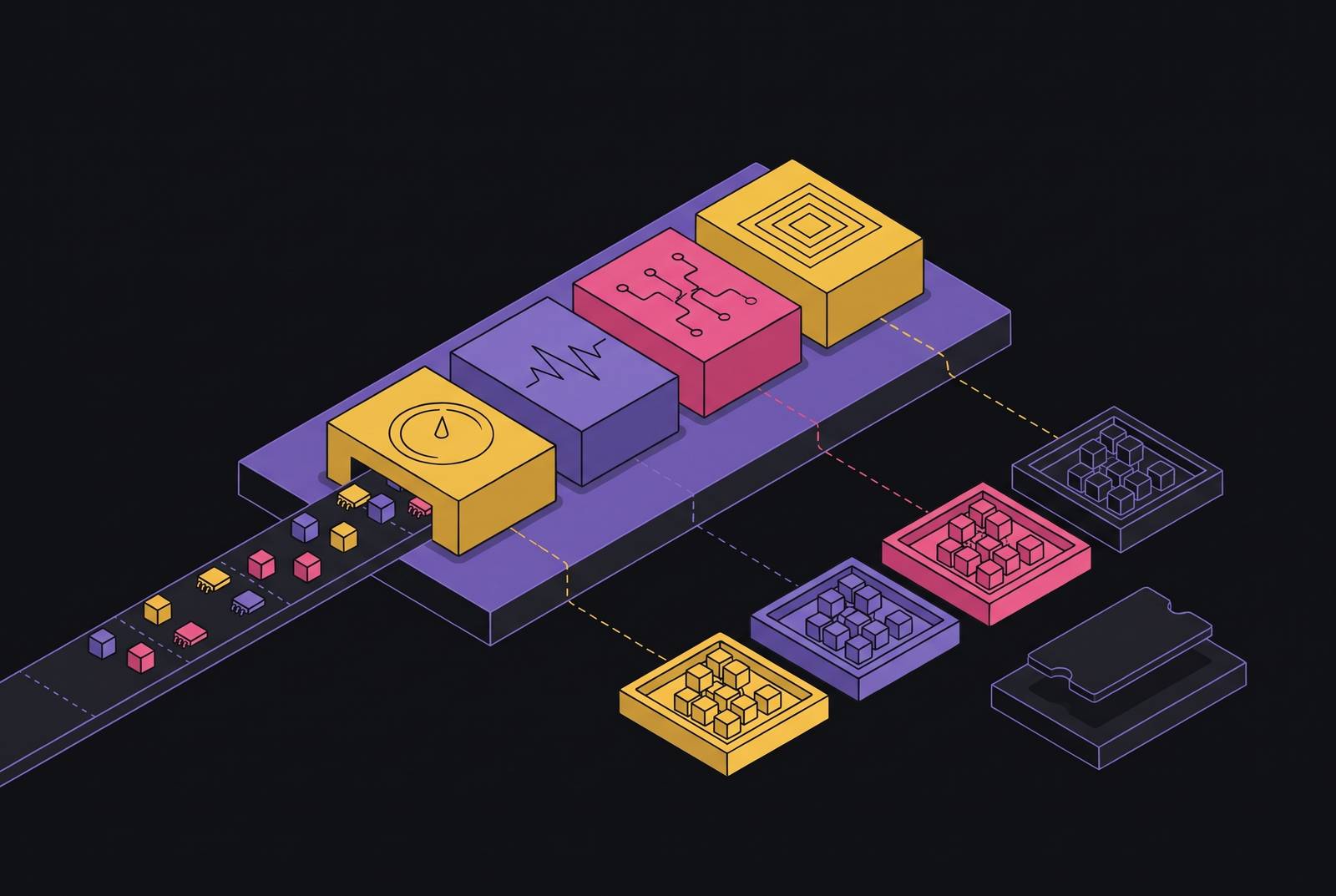
To group recurring AI agent failure patterns automatically, a tool needs full-trajectory telemetry, a way to compare what happened with the agent’s instructions, and automatic labels that show where a fix belongs. The decisive observability criterion is whether a tool explains why failures recur before an engineer opens an incident ticket. This shortlist distinguishes runtime grouping from the evaluation and security regression tools that support it.
Why AI agents fail silently and why APM tools miss it entirely
Conventional monitoring assumes that when execution is healthy, it is a useful sign that the application is healthy too. AI agents break that assumption because the same input can produce a different plan, different tool calls, and different costs on every run. A run can have a success status, clean latency, and normal CPU and still give a completely wrong result. In multi-agent pipelines, a sub-agent’s mistake can cause strange behavior downstream, far from its origin.
An analysis of silent failures frames this disorder as a structural property of agent systems. That distinction exposes the monitoring gap. APM asks whether execution succeeded, while agent monitoring must check whether it did what the task called for. External telemetry must record tool-call results without relying on what the agent says about its own reasoning. Without that intent-aware view, failures go unseen until a user complains or costs spike.
What production agent failures actually look like — the failure categories that matter
Production failures fall into five operational categories, each pointing toward a different repair. Planning errors include wrong tool sequences, infinite loops, and premature termination, where the emitted plan does not match execution. Tool errors include tool-hallucination, which invokes a function absent from the runtime catalog, and no-error-handling, where an agent fabricates a plausible response after a tool returns a 500. These failures require different fixes despite similar outputs. Changing a planner does not repair a nonexistent function or a missing retry policy.
Retrieval errors arise when the retriever supplies the wrong chunk, misses necessary context, or leaves the generator working from a hallucinated source. Reasoning errors differ because grounded context was available, but the model still made a factual or mathematical mistake or ignored an instruction. Safety/policy violations include PII leaks, refunds promised outside policy windows, and jailbreak compliance. The distinction determines where investigation should begin. A wrong answer alone cannot show whether the retriever, generator, or policy controls failed.
The WOWHOW taxonomy, catalogued from 300+ real production failures, finds that most coding-agent failures involve confidently completing the wrong task. In Scope Creep Execution, the agent changes files outside the stated boundary, while in Test Oracle Confusion, it changes tests to make them pass and leaves the code unfixed. With Integration Horizon Blindness, the agent makes changes that pass local tests but break downstream services. Microsoft AI Red Team’s v2.0 taxonomy adds adversarial categories, including MCP/Plugin Abuse, Goal Hijacking, and Inter-Agent Trust Escalation, where the task or trust relationship itself becomes the attack surface.
Why root-cause grouping is the capability that separates useful observability from expensive logging
Without grouping, an on-call engineer sees a wrong output without a structural link to prior incidents. With grouping, that trace can belong to a cluster of 40 similar failures sharing a planning-layer fingerprint and pointing back to a prompt change three deploys ago. This is the operational distinction between finding another symptom and recognizing a recurring cause. The failure category becomes the unit of postmortem, while its named subtype becomes a regression test in CI.
Producing that result requires three capabilities working together. Structured telemetry must separate reasoning, tool-call, and control-flow spans across the full agent trajectory, including sub-agents. Semantic clustering must then compare what the agent was meant to do with what it did. Automatic labeling must link the cluster to a known failure category and the fix surface where it belongs. Similarity alone is not a diagnosis. A cluster becomes useful when its shared deviation points toward the planner, tool layer, retriever, generator, or output scanner.
The hardest recurring case returns success and records nothing anomalous until execution is compared with the agent’s instructions. HTTP status, latency percentiles, and error rates cannot expose that mismatch because they contain no account of intent. A tool that groups operational errors may thus still miss the agent failures it was bought to catch. Select a tool by its ability to explain why a cluster happened before an engineer goes looking.
What to look for in a tool before you evaluate any specific product
Before checking how well a tool groups failures, teams need to check its framework compatibility. Re-instrumentation from scratch forfeits trace history and forces teams to change tools during a critical debugging window. Relevant frameworks include Vercel AI, OpenAI Agents SDK, LangGraph, and Microsoft Agent Framework. Support without bespoke adapters passes that initial gate. Beyond compatibility, four questions distinguish causal grouping from a more polished presentation of logs.
First, check whether the tool captures the full trace hierarchy or only the final LLM call. Model-hop instrumentation misses upstream planning and tool-call failures, including a sub-agent error that propagates through two downstream steps. Second, check whether grouping follows intent deviation or output patterns. Repeated text is not the same as repeated failure. Output-pattern grouping can catch the same error when it recurs yet count a run as a success when the agent confidently completes the wrong task.
Third, check whether cluster labels identify actionable fix surfaces or require an engineer to interpret descriptive tags. “Reasoning error” linked to the generator directs investigation, while “unexpected output” leaves the cause unresolved. Fourth, check whether a known cluster triggers a regression alert when it reappears after deployment. Recurrence should not depend on human recognition. MCP tool-schema documentation is a useful diagnostic case because a regression can cause silent over-calling and retries that resemble a model regression.
The shortlist — what tools cluster similar LLM agent errors automatically
The available product evidence supports a narrower shortlist than the buyer’s question might suggest. Braintrust has the layer for evaluation and regression, while OWASP Agent-Security-Regression-Harness has tests for security regression. Neither is established here as a complete production runtime grouping system. That boundary is important to the comparison. Evaluation against sampled traces and pre-merge security tests can help with root-cause grouping without themselves clustering failures continuously against the instructions.
Braintrust documents how real execution exposes failures caused by tool descriptions and schemas that protocol checks cannot detect, which makes its evaluation approach relevant to tool-error diagnosis. It runs evaluations against production-sampled traces, allowing failure clusters to be compared with golden datasets for regression detection. Teams using it for evals should pair it with a tool that handles production trace grouping.
Against the four questions, Braintrust’s supplied evidence is clearest on regression evaluation. It does not establish full hierarchical runtime capture, automatic clustering by intent deviation, or automatic assignment of actionable fix surfaces. Nor does evaluation against a golden dataset alone show that production alerts go out automatically when a cluster returns. Those are separate capabilities.
OWASP Agent-Security-Regression-Harness is an open-source tool for executable security regression testing of agentic applications and MCP-integrated systems. Its scope fits known security failure patterns, including MCP/Plugin Abuse, Goal Hijacking, and Agentic Supply Chain Compromise. Against the framework, it serves as a CI gate that catches a known security pattern before deployment. It has no commercial support, making it incomplete as a standalone solution for teams unable to maintain an open-source security harness.
These distinctions leave a specific requirement for the production observability layer. It must check full traces against instructions, group deviations automatically, assign fix surfaces, and spot clusters when they return without someone reviewing them by hand. The supplied evidence does not establish a named product that satisfies that whole requirement. A longer vendor list would obscure the gap. The defensible shortlist therefore separates tools that support diagnosis and regression testing from the runtime grouping capability still to be demonstrated.
How root-cause grouping changes what happens after a failure is detected
A planning cluster directs attention to the planner prompt, cycle detector, or plan-vs-execute evaluation, while a tool cluster points toward the tool allowlist, schema guard, or retry policy. Retrieval clusters instead lead to the retriever rubric, chunker evaluation, or ingestion controls. Routing no longer waits for manual trace reconstruction.
During the n8n upgrade, a question-answering tool made invalid JSON schemas, which caused failures that looked like model regression. The visible outcome pointed toward the wrong layer. Root-cause grouping would make this a tool-error cluster rather than treating each poor result as evidence of a deteriorating model. That framing leads the team to look into how schemas are generated.
Regression recognition also changes severity assessment and rollback decisions. When a known cluster returns after deployment, the team can distinguish recurrence from an unfamiliar failure mode. MCP schema changes are a particularly important surface because documentation regressions can produce silent over-calling and error retries. The 2026-07-28 MCP specification revision also made breaking changes when it removed protocol-level sessions and the Mcp-Session-Id header, so session-based test harnesses need updates. Returning tool failures need interpretation against this concrete compatibility boundary.
Hierarchical grouping adds another benefit in multi-agent systems. A wrong answer surfaced by an orchestrator can originate in a retrieval sub-agent three hops upstream. Grouping by the originating layer prevents the output-producing agent from becoming the default suspect. The symptom and the cause remain distinct. In a five-agent pipeline, that attribution narrows an investigation that would otherwise range across the entire chain.
The failure modes that current grouping approaches still don't handle well
Root-cause grouping works best when failures leave a recognizable trace-level fingerprint. It is less reliable when causes span sessions, enter through supply chain components, or are designed to evade pattern detection. In Session Context Contamination, data planted early in a session can distort reasoning many turns later, with the contamination and resulting failure appearing in different spans. Without session-level memory modeling, automatic clustering can miss the relationship.
Agentic Supply Chain Compromise presents a different visibility gap. A compromised MCP server can inject natural-language instructions that change behavior without altering a binary or producing a schema error or tool-call failure. Inter-Agent Trust Escalation likewise can appear as an ordinary message until a claimed identity or permission is compared with an independent identity model. The trace alone is insufficient in these cases. OWASP’s harness addresses known security patterns at the CI gate.
Teams need identity verification between agents, supply chain auditing of MCP server registries, and session-level memory inspection. These protections complement production failure detection. The direction of observability is toward modeling intended behavior at the session and goal level, because these blind spots involve corrupted goals. Teams should build root-cause grouping into production now for the failures it handles well and address adversarial blind spots as a separate layer.